How to Optimize Resource Farming in Popular MMORPGs

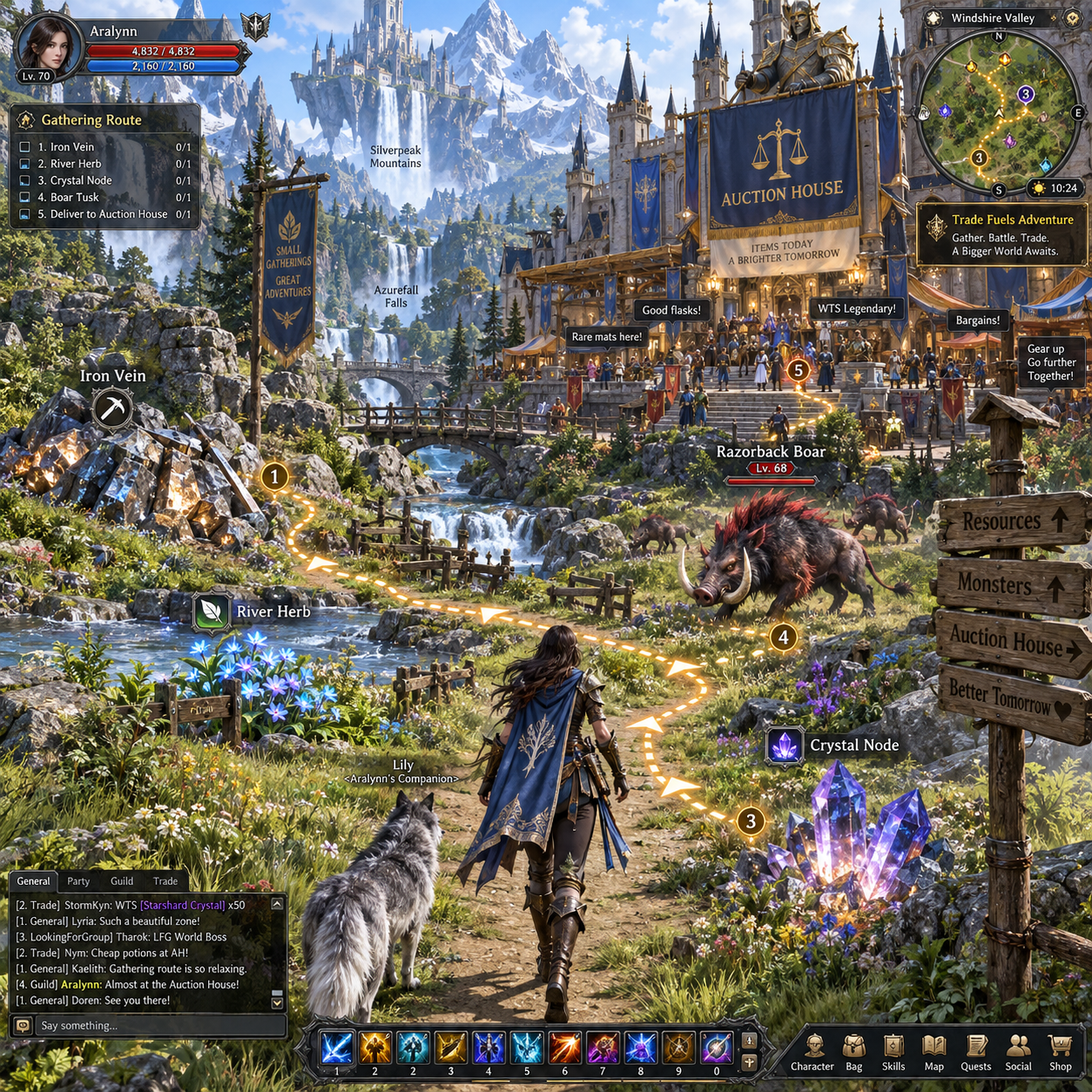
Efficient resource farming in a popular MMORPG is a repeatable process, not a matter of finding one crowded spot and staying there. The strongest routine combines a clear goal, reliable farming routes, suitable character gear, disciplined inventory management, and regular checks of the in-game economy.
Whether you gather herbs, mine ore, defeat mobs for rare drops, or run a hybrid route, measure the result after expenses and downtime. A route that produces fewer items can still be better if it involves less travel, lower risk, and stronger auction house demand.
Define Your Farming Goal and Resource Priority
To optimize resource farming, choose a specific objective first: crafting materials, currency, consumables, rare drops, or upgrade resources. Your goal determines which activities deserve your time and which resources have practical value.
A player preparing for a raid may prioritize alchemy ingredients, food components, enchanting materials, or equipment upgrade items. A crafter may need a large volume of common resources, while a trader may prefer scarce materials with high demand. These goals can lead to completely different farming decisions.
- Crafting materials: Choose these when you can use them immediately or sell them into a stable market.
- Currency farming: Favor consistent activities with predictable rewards and limited preparation costs.
- Consumables: Check whether players regularly buy potions, food, ammunition, or similar supplies.
- Rare drops: Consider the long average time between valuable drops and the risk of unlucky sessions.
- Upgrade resources: Prioritize them when a character milestone makes their value higher than their auction house price.
Use a simple priority filter: need, demand, reliability, and access. A rare item is not automatically the best target if its drop rate is low, its market is saturated, or the activity requires gear you do not yet have. Conversely, common crafting materials can be excellent when they sell quickly and require almost no downtime.
Compare Farming Methods by Efficiency
The most efficient farming method produces the highest net value for the time and risk invested. Compare resources per hour, travel time, competition, character requirements, danger, and market value instead of judging an activity by its drop quantity alone.
Gathering professions usually offer predictable output through resource nodes, while combat farming depends more heavily on mob density, drop rates, kill speed, and loot rules. Instanced content may reduce competition, but it can include entry limits, group requirements, or lockouts.
Use this practical formula:
Net efficiency = (sale value or personal-use value − expenses) ÷ total time spent
Count the full session. Include travel to the farming area, repairs, ammunition, consumables, teleport costs, auction house fees, sorting time, and interruptions. If a route yields 100 units in 30 minutes but takes another 10 minutes to travel and organize, its real output is based on 40 minutes, not 30.
- Resources per hour: Measures raw output.
- Net value per hour: Measures output after direct costs.
- Consistency: Shows whether results remain useful during unlucky sessions.
- Competition: Accounts for contested resource nodes and crowded mob areas.
- Risk: Includes world PvP, elite enemies, death penalties, and failed group attempts.
Rare-drop farming can produce exceptional results in one session and almost nothing in the next. Common materials often feel less exciting, but their predictable supply makes them easier to test and plan around.
Build Efficient Farming Routes
To build efficient farming routes, connect nearby resource nodes, high-density mob areas, quest objectives, and vendor or storage points into a repeatable loop. The best route minimizes empty movement while allowing resources to respawn before you return.
Start by marking every relevant node or enemy camp on the map. Then divide the area into short segments and remove detours that add travel without adding meaningful output. A route should have a clear beginning, end, and reset point, such as a city, flight path, dungeon entrance, bank, or crafting station.
Plan Around Respawn Timers and Mob Density
Respawn timers determine whether a circular route is sustainable. If resource nodes reappear slowly, add a second loop or combine gathering with combat. If mobs respawn quickly, focus on an area where your character can maintain a steady kill chain without waiting.
Mob density matters because short gaps between targets reduce movement and improve combat farming. However, the densest location is not always best. A slightly less crowded camp may produce more net value if it has fewer players competing for kills and fewer dangerous enemies that force recovery.
Hybrid routes are useful when gathering and combat overlap. For example, collect resource nodes along a path while defeating nearby mobs that block access, drop supplemental crafting materials, or complete a quest objective. Keep the route simple enough to repeat from memory.
Optimize Your Character, Gear, and Inventory
To reduce farming downtime, improve movement speed, gathering bonuses, kill speed, survivability, carrying capacity, and inventory organization. Small improvements matter because they repeat across every minute of a long session.
For gathering professions, prioritize tools, profession bonuses, gathering speed, and movement options. For combat farming, choose gear and abilities that shorten the time between pulls without creating frequent deaths or recovery breaks. A defensive build can outperform a higher-damage build when the farming area contains elite enemies or world PvP.
- Empty your bags before leaving and reserve space for high-value materials.
- Set automatic loot filters so low-value items do not fill your inventory.
- Carry only the consumables, tools, and quest items needed for the route.
- Use a nearby bank, mailbox, vendor, or storage character when the game supports it.
- Repair before starting and record recurring repair or ammunition costs.
Inventory management is an economic tool. When bags fill after 20 minutes, returning to town may erase the advantage of a profitable location. On the other hand, buying maximum carrying capacity is not always sensible if the upgrade takes dozens of farming sessions to repay.
Use the rule of productive uptime: every choice should either increase output or reduce nonproductive time. More movement speed helps only when travel is a large part of the route. A gathering bonus matters less if the nodes are contested and you spend most of the session waiting.
Adapt to MMORPG-Specific Mechanics
Adapt your farming plan to the MMORPG’s rules for instanced content, shared resource nodes, group loot, profession systems, and world PvP. A strategy that works in one game may fail in another because access, competition, and reward ownership differ.
Shared resource nodes make route timing and server population important. In an instanced zone, competition may disappear, but entry restrictions or stamina systems can limit total output. Group farming can improve mob density and safety, yet loot rules may divide drops or create conflicts over valuable items.
Check the game’s rules before using any efficiency tool or addon. Automation, bots, account sharing, exploits, and unattended play can violate terms of service and put valuable characters or items at risk. Legitimate map markers, combat planning, and manual tracking are safer foundations.
- Open-world gathering: Favor low-competition zones and flexible routes.
- Instanced farming: Calculate lockouts, entry costs, and completion time.
- Group farming: Confirm loot distribution and whether player count improves output.
- World PvP zones: Add scouting, escape routes, and the expected cost of deaths.
- Profession systems: Compare specialization bonuses with the price of changing or respecing professions.
Safety has a measurable value. If a dangerous location produces 20% more raw resources but causes frequent deaths, long corpse runs, or lost consumables, its net efficiency may be lower than a safe route.
Use the In-Game Economy to Choose What to Farm
Use supply, demand, crafting relevance, auction house prices, listing fees, and price volatility to decide what to farm. Market value changes by server, region, patch, time of day, and player activity, so never treat a displayed price as guaranteed profit.
Before committing to a route, inspect recent auction house listings rather than one unusually high offer. Look at how many units are available, whether completed sales appear quickly, and whether the material is used in popular recipes, consumables, upgrades, or endgame equipment.
Evaluate Value Without Chasing Speculation
High prices can signal scarcity, but they can also indicate low demand. A material that sells for a large amount may remain listed for days. A cheaper ingredient used in hundreds of crafting recipes may generate faster and more reliable returns.
Track three values separately:
- Raw value: The current market price multiplied by the quantity collected.
- Realized value: What the item actually sells for after undercutting, fees, and unsold listings.
- Use value: What you save by crafting your own upgrades or consumables.
Recheck prices after major patches, new raids, profession changes, seasonal events, and balance updates. Market saturation can arrive quickly when many players discover the same popular route. Selling gradually may protect your returns, but holding materials also exposes you to price volatility.
Track Results and Improve Your Routine
To improve a farming routine, record the start and end time, output, expenses, interruptions, deaths, and actual sale value for several sessions. Replace routes that consistently underperform instead of trusting a single lucky or unlucky result.
Test one change at a time. Run the same route for three comparable sessions, then change one factor such as the starting point, gear set, loot filter, or farming zone. This creates a useful baseline and reveals whether an upgrade genuinely improves gold-per-hour efficiency.
Common Farming Mistakes
- Chasing the highest listed price: Players assume an expensive item guarantees profit. Low demand and listing fees can leave inventory unsold. Check turnover and realized sales instead.
- Ignoring travel and preparation: A route may look productive while repairs, sorting, and transport consume a large share of the session. Measure total elapsed time.
- Overvaluing rare drops: A low drop rate can create long periods with no meaningful reward. Compare the average value with a consistent crafting-material route.
- Refusing to change locations: Familiar routes feel comfortable even after a patch or market shift reduces their value. Review output and auction house conditions weekly or after major updates.
Use a simple log with five columns: time, quantity, gross value, expenses, and interruptions. After several sessions, calculate the average net value per hour. Keep a second score for personal usefulness, since materials used for your own progression may be worth more than their sale price.
Frequently Asked Questions
How do you calculate the efficiency of a farming route?
Divide the route’s net resource value by total time spent. Include travel, repairs, consumables, auction house fees, sorting, deaths, and other downtime in the calculation.
Is it better to farm rare drops or common crafting materials?
Rare drops are better when their expected value and sale demand justify the risk and inconsistent results. Common crafting materials are usually better for predictable income and easier planning.
How can you reduce downtime while farming?
Use shorter travel paths, improve movement speed, organize inventory before leaving, filter unwanted loot, choose sustainable combat pulls, and position the route near storage or vendors.
When should you change farming locations?
Change locations when competition rises, output falls, the auction house becomes saturated, a patch changes demand, or the area no longer matches your character’s power and route requirements.
How does the auction house affect resource farming?
The auction house converts resources into potential value, but prices are affected by supply, demand, listing fees, market saturation, and volatility. Measure actual completed sales rather than relying on the highest listing.
Effective MMORPG resource farming comes from testing rather than guessing. Set a target, build a low-travel route, prepare your character and inventory, measure net results, and adapt when game mechanics or market conditions change.